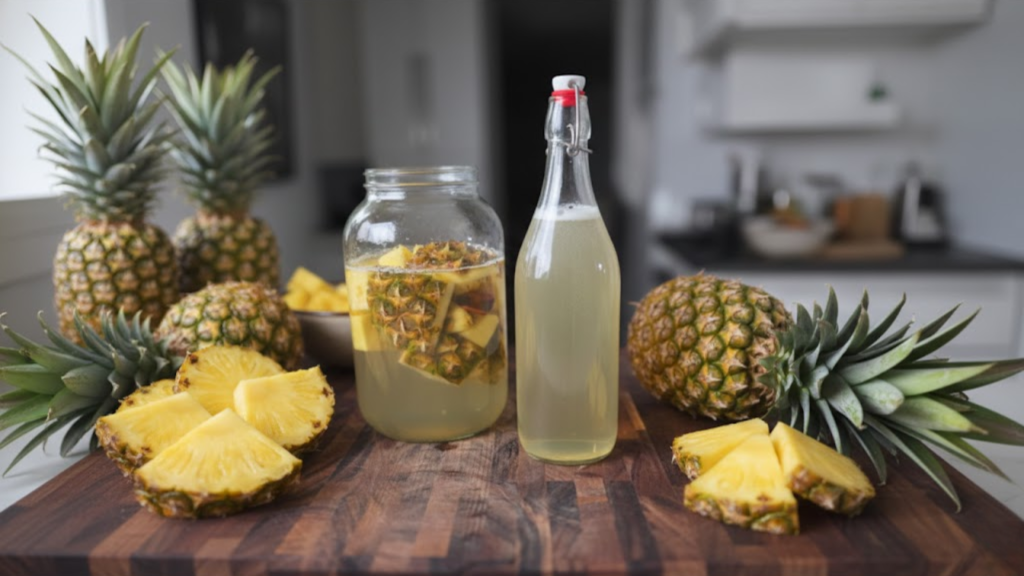

How to Make Traditional Tepache (The Simple Method That Works)
This is the exact process of minimal effort, maximal payoff.
Ingredients
- 1 whole pineapple (organic preferred)
Use peels + core only (save the flesh for eating). - 2–3 Tbsp raw cane sugar or piloncillo
- 1 cinnamon stick (optional, highly recommended)
- 1–2 whole cloves (optional)
- Fresh non-chlorinated water
Equipment
- 1-gallon glass jar
- Breathable cover or loose lid
- Fine mesh strainer
Step-by-Step: Your 3-Day Tepache Timeline
- Wash your pineapple thoroughly.
(Especially if it’s not organic you want the peel clean.) - Remove the peel and core.
Put the peels + core into your 1-gallon jar. Eat the pineapple flesh or save it for smoothies. - Add sugar + spices.
Add 2–3 Tbsp sugar and your cinnamon/cloves if using. - Fill with water.
Pour in non-chlorinated water, leaving 1–2 inches of headspace at the top. - Cover loosely.
Use a breathable cover or a lid that’s not tightened all the way (you want gases to escape). - Ferment at room temperature for 2–3 days.
Keep it out of direct sunlight. Taste on day 2.
Fermentation Timeline (What to Expect)
- Day 1: Sweet and still
- Day 2: Light bubbles, aroma develops
- Day 3: Tangy and lightly sparkling
You’re not aiming for “strong.” You’re aiming for fresh, fruity, clean acidity.
Signs Your Tepache Is Perfect
You’ll know it’s ready when you notice:
- gentle fizz (tiny bubbles, especially when stirred)
- fresh pineapple aroma
- a clean tang (like tropical lemonade)
If it smells like alcohol or nail polish remover, it’s gone too far.
Adjustments & Troubleshooting (Quick Fix Guide)
Want it brighter and cleaner?
- Use less sugar (closer to 2 Tbsp)
Want more fizz + stronger fermentation?
- Use more sugar (closer to 3 Tbsp)
Smells boozy/alcoholic?
- It ferments too long or too warm → shorten to 2 days next time and refrigerate earlier.
Storage & How to Drink It
- Strain when it tastes right.
- Store in the fridge to slow fermentation.
Optional carbonation boost:
Bottle it and leave at room temp for 12–24 hours for extra fizz.
Just burp once (open briefly) so pressure doesn’t build too much.
How to Use Tepache Daily (Without Overdoing It)
Start simple:
- ¼–½ cup per day, ideally before meals or mid-afternoon
- Sip slowly the first few times (your gut will tell you what’s enough)
You can drink it plain, pour it over ice, or add a squeeze of lime for a brighter finish.
Final Words: Why Tepache Works
Tepache works because it respects biology.
It’s not extreme. It’s not complicated. It’s not another “perfect gut protocol.”
It’s a gentle ferment that brings your system back toward balance one jar at a time.
If you want a simple, refreshing way to support digestion and microbial diversity without turning your kitchen into a lab… tepache is your starting line.
Want the printable version (plus a quick “success checklist” so your first batch comes out perfect)? Grab the Free Starter Guide here: https://dishbydavid.gumroad.com/l/pickleguide