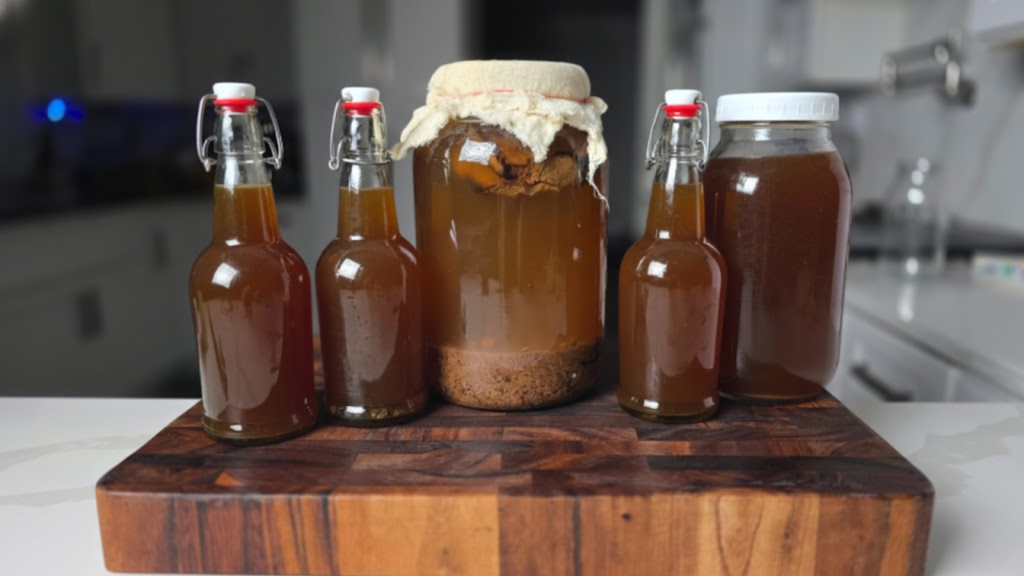
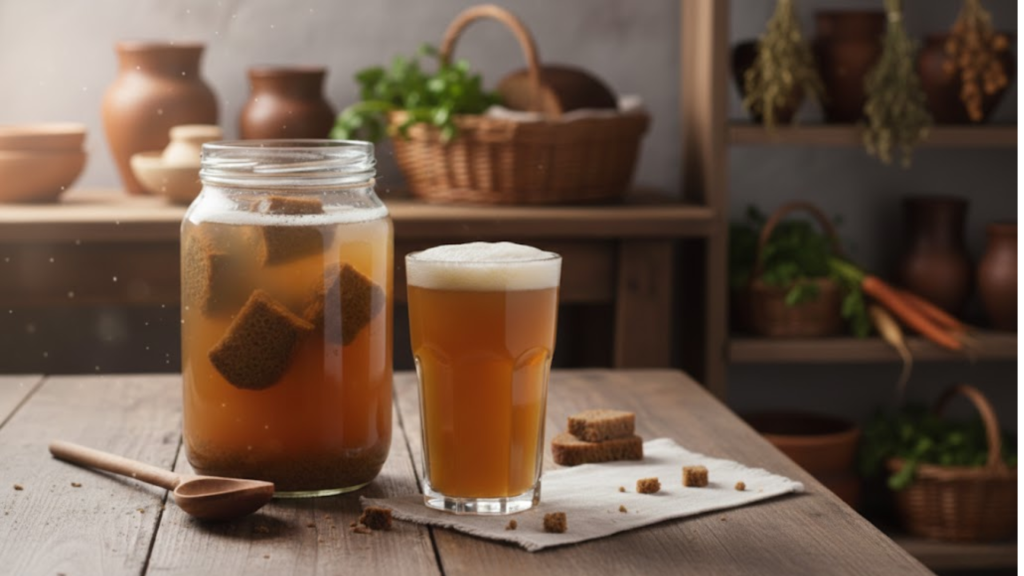
Classic Rye Bread Kvass Recipe
This is the traditional method, broken down so you can’t mess it up.
Ingredients
- 6–7 slices rye bread, deeply toasted
- ~1 cup sugar total, split into two additions
- Fresh warm water (warm, not hot)
- For bottling: raisins + honey or sugar
Equipment
- 1-gallon glass jar
- cloth cover (or clean towel + rubber band)
- stirring spoon
- flip-top bottles
Day 1–2: Build the Base
- Toast the rye bread until very dark and dry.
You’re not aiming for gold. You want “almost too dark.” This is where the malty depth comes from. - Add bread to your 1-gallon jar.
Add ½ cup sugar. - Pour warm water to just cover the bread.
Stir well to dissolve the sugar. - Cover with cloth and ferment for 2 days.
Stir twice daily.
What you should notice
- the bread starts rising
- small bubbles appear
- it smells warm, toasty, and slightly tangy
Day 3–5: Develop the Kvass
- Add more warm water, leaving a little headspace at the top.
- Add the remaining ½ cup sugar.
- Ferment 3 more days, stirring daily.
This is where it turns from “sweet bread water” into real kvass.
Signs of Success (Your Ferment Is On Track)
You’re looking for:
- rising bread
- visible bubbles
- a malty, tangy aroma
If it smells clean, bready, tangy, and alive you’re winning.
Strain & Bottle (This Is Where the Fun Starts)
- Strain the liquid into a clean container.
- Bottle your kvass and add, per bottle:
- 2–3 raisins
- a squirt of honey or about ¼ tsp sugar
- Cap and carbonate 12–24 hours at room temp.
Then refrigerate.
Pro tip: open the first bottle carefully. Kvass can get enthusiastic.
How to Drink It (Without Overdoing It)
Start simple:
- ½ cup to 1 cup per day, chilled
- best before meals or earlier in the day
You can drink more once you know how your body responds, but kvass is potent in a quiet way. Let it be a ritual, not a chug.
Endless Kvass Starter: The “Never-Ending Jar” Method
This is where kvass becomes effortless.
After you strain:
- Leave the crumbs and leftover bread bits in the jar (that’s your starter ecosystem)
Then restart like this:
- Add 3–4 new deeply toasted slices
- Add 1 cup sugar
- Add warm water
- Ferment 3 days
- Strain, bottle, repeat continuously
Once your jar is established, the flavor gets better and more consistent, smoother, rounder, and more “classic.”
Common Mistakes (So You Don’t Blame the Recipe)
- Bread isn’t dark enough → kvass tastes thin and weak
- Water is too hot → you can stall the ferment
- No stirring early on → uneven fermentation and off flavors
- Over-carbonating too long → geyser bottles (ask me how I know)
When in doubt: keep it warm-ish, stir early, and trust your nose.
Final Words: Why Rye Kvass Works
Rye kvass works because it’s simple biology done right.
It’s not perfect. It’s not a cleanse. It’s not a trend.
It’s toasted bread + time + microbes turned into a drink that feels like it belongs in a healthy gut routine.
If you’ve been craving something deeply grounding, traditional, and actually doable… start here. One jar can become a habit that supports you for months.
Want a printable version of this recipe plus my “kvass troubleshooting + flavor upgrade” starter guide?
 Grab the Free Starter Guide here: https://dishbydavid.gumroad.com/l/pickleguide